Scout Rust Repair: What California Buyers Need to Check Before Buying
The Truth About California Scouts and Rust There is a myth that California Scouts don’t rust. It has sold a


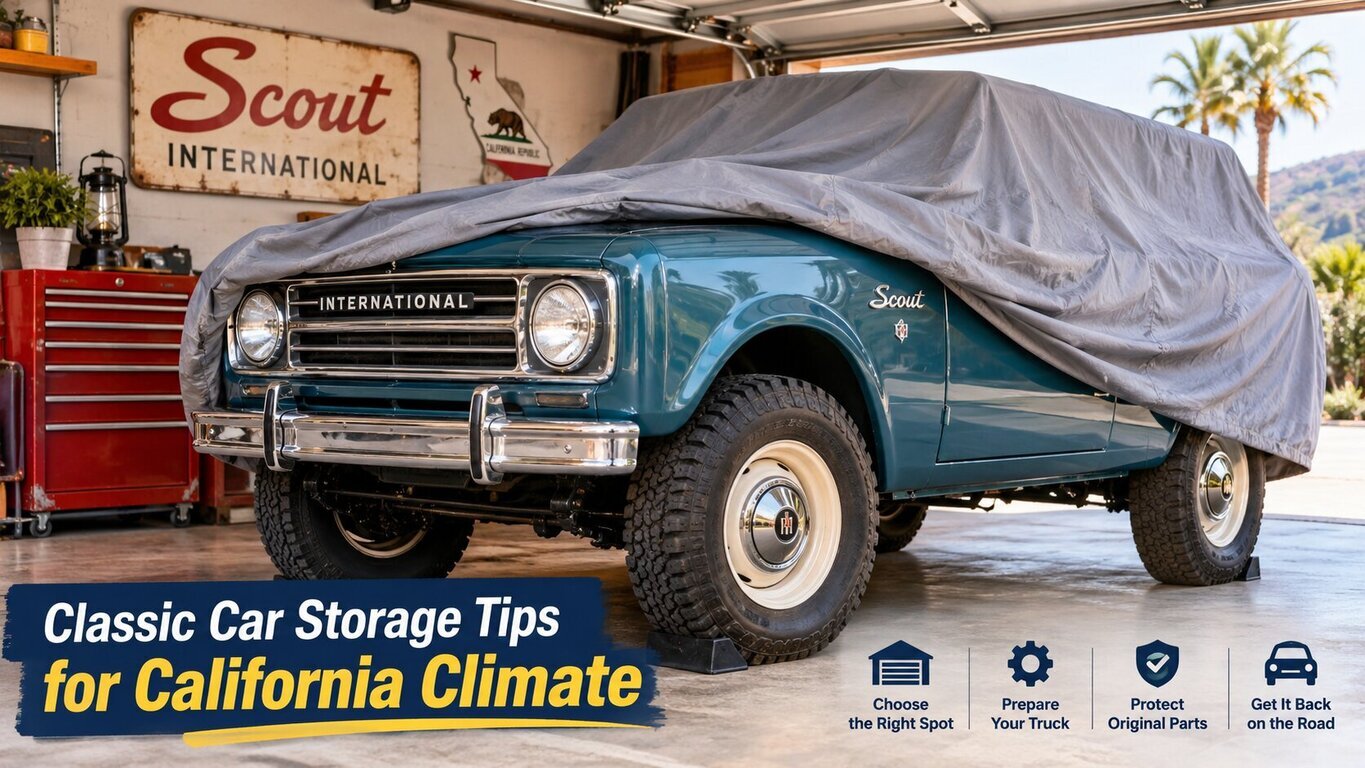
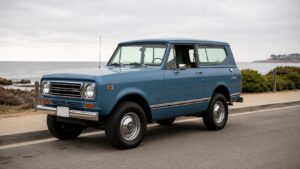
California looks good on a vintage SUV. No road salt, not much snow and lots of dry days. But the same state that shields your Scout from brutal winters can still damage it while it’s sitting: salt air and fog on the coast, triple-digit heat and UV inland, and wildfire ash just about everyplace. These classic car storage tips cover where to park the truck, how to prepare it and what to check before it hits the road again.
Keeping a classic car in a garage is the baseline. A home garage works if it is dry, closed and out of direct sun. What matters most is stable conditions. Big swings in temperature and humidity cause condensation, and condensation causes rust and mildew in an old truck.
Your location changes the main risk:
Whether your truck lives in the Bay Area or in Southern California, our NorCal and SoCal teams can talk through the conditions where you park it.
If you don’t have a proper garage, it’s worth the expense to keep your antique car in a specialized facility. Look for classic car storage climate control, which typically means humidity held in a steady range, often in the neighborhood of 40 to 50 percent. Ask about fire protection, security, insurance requirements and can you come and visit. A unit with only a roof is not the same thing.
These steps also apply to any stretch of weeks or months when you are storing classic cars. Do them in this order:
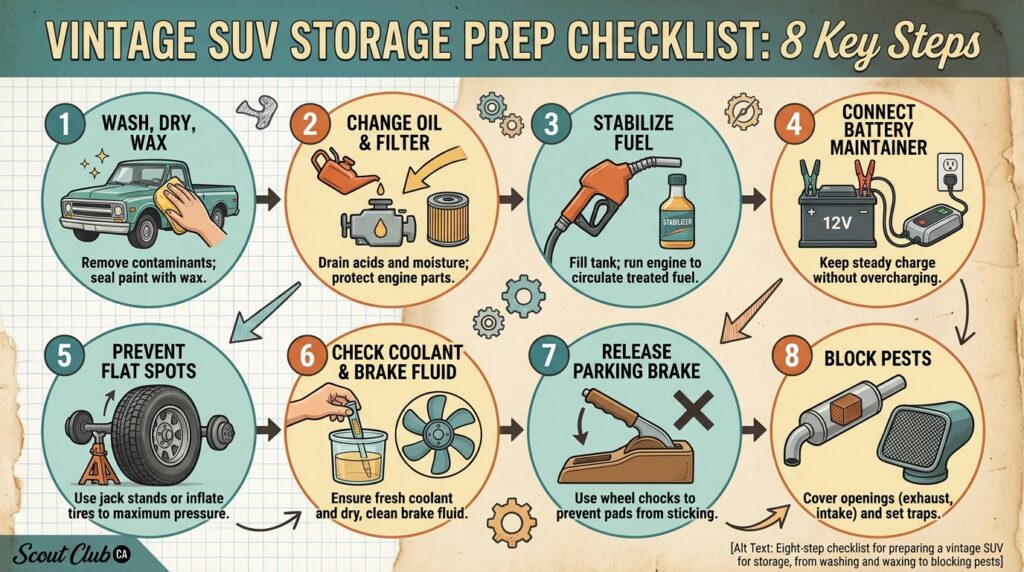
moisture and fuel, no anti-freeze. Test the coolant mix in the mountains to ensure that it protects against the lowest temperature the truck will encounter. The winterizing job is the checklist above, everyplace else.
If you are learning how to store a classic car for the long term, defined as six months or more, add a few steps. Use a breathable cover, never a plastic tarp, which will trap moisture against the paint. Place moisture absorbers in the cabin and keep the windows closed. Check the truck monthly for leaks, pests, soft tires and condensation. Only start the engine if you can drive it long enough to bring it up to full operating temperature, since short idling adds moisture to the oil and exhaust.
Handle the paperwork. California’s planned non-operation (PNO) option allows for the suspension of registration fees when a vehicle is off the road, and some insurers offer reduced coverage during storage. Maintain the agreed-value coverage and verify the details with the DMV and your insurer. Our FAQ is a great place to start if you have questions about your own truck.
Original metal and period rubber need extra attention. Wipe a light coat of oil on exposed bare metal and hinges, and check the lower fenders, floors and tailgate seams for early rust. Our post on 18-gauge original steel explains why that metal is worth protecting. Treat rubber seals with a conditioner so they don’t dry out and crack.
Reverse the process. Remove the cover and any pest blockers, then look under the hood and under the truck for nesting and leaks. Inspect the tires and belts, check every fluid, and start the engine and let it warm before driving. Take the first few miles gently. If the truck needs smog or registration work afterward, our California smog guide explains what to expect.
Storage is one part of caring for classic cars. The best protection starts with a truck that was restored properly. See how we work in our restoration process, or contact Scout Club CA with your questions.
The Truth About California Scouts and Rust There is a myth that California Scouts don’t rust. It has sold a

Deciding how deep to take an International Scout build is the most consequential choice an owner will make. The scope
Finding an unrestored International Scout in the Golden State feels like striking gold. Thanks to dry Central Valley ranches and
Few vintage 4x4s turn heads like an International Harvester Scout. With its boxy stance, rugged utilitarian lines, and unapologetic character,